
Polyamide Thermal Barriers and PVC Insulation
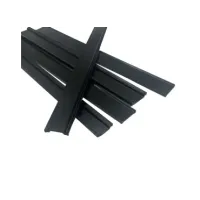
Thermal Resistance: Polyamide vs. PVC
Thermal insulation efficiency is determined by a material’s ability to reduce heat transfer. Glass fiber reinforced Polyamide 66 GF25 offers much lower thermal conductivity compared to PVC, providing superior energy conservation.
Polyamide thermal barriers, thanks to their special molecular structure and glass fiber reinforcement, exhibit high resistance to heat transmission.
PVC, while effective in some applications, has higher thermal conductivity compared to polyamide thermal barriers. This means that in aluminum window and façade systems, polyamide barriers provide better insulation than PVC profiles.
Mechanical Strength and Durability
Polyamide thermal barriers stand out with their exceptional mechanical durability. 25% glass fiber reinforced Polyamide 66 (Polyamide 66 GF25) offers high mechanical strength, providing resistance against impacts and long-term wear.
PVC insulation profiles, having lower mechanical strength, can become brittle over time. Particularly under temperature fluctuations, they are prone to cracking, reducing their insulation efficiency. This leads to more frequent replacements and higher long-term costs.
Energy Savings in Industrial Applications
As Turkey’s first polyamide thermal barrier manufacturer with 30 years of experience, our company provides solutions that enhance energy efficiency. Our products are used in industrial and architectural projects across more than 50 countries, delivering significant energy savings.
A Sustainable and Eco-Friendly Choice
Today, sustainability plays a crucial role in modern construction and manufacturing processes. Polyamide thermal barriers are produced with an environmentally friendly approach:
✔ Reduce carbon footprint by consuming less energy.
✔ Use of long-lasting materials minimizes waste.
✔ Efficient production processes minimize environmental impact.
In contrast, PVC, due to its plasticizer content and degradation over time, can have a higher environmental impact. Therefore, polyamide is a more sustainable choice.
Conclusion: Polyamide Thermal Barriers Lead in Energy Efficiency
When comparing polyamide thermal barriers and PVC insulation profiles, polyamide is the clear winner:
✔ Superior thermal insulation
✔ High mechanical strength and long lifespan
✔ Proven energy savings in industrial applications
✔ Eco-friendly and sustainable production
As Turkey’s first manufacturer of polyamide thermal barriers, we continue to lead the industry with 30 years of experience. By investing in polyamide insulation solutions, you can achieve maximum energy savings, lower costs, and a sustainable future.