
PA vs PVC vs PU Thermal Breaks, Which Material Is Superior for Aluminum Systems?
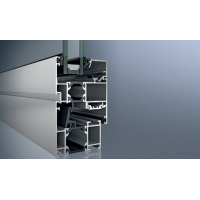
PA vs PVC vs PU Thermal Breaks, Which Material Is Superior for Aluminum Systems?
In modern aluminum window, door, and façade systems, the selection of a thermal break material is not only a matter of thermal insulation performance but also a critical engineering decision involving mechanical strength, long-term durability, manufacturability, and overall system reliability.
Among the most commonly used materials for thermal break applications are PA (polyamide), PVC (polyvinyl chloride), and PU (polyurethane). While each material offers specific advantages, glass-fiber reinforced PA solutions have become the dominant standard in high-performance aluminum systems.
The correct material choice must consider energy efficiency targets, structural requirements, production methods, and expected service life.
The Evolution of Thermal Break Materials
First Phase: PVC and Basic Insulation Approaches (1990–2005)
In early thermal break systems, PVC was widely used due to its low cost and ease of processing. However, limitations in thermal stability and mechanical strength became evident in demanding structural applications.
Key characteristics of PVC:
- Low production cost
- Easy processability
- Moderate thermal insulation performance
- Limited temperature resistance
- Low structural load capacity
Second Phase: Expansion of PU-Based Filling Systems (2005–2015)
Polyurethane (PU) solutions began to be used in certain thermal break applications due to their very low thermal conductivity. However, PU systems were generally not used as primary structural elements but rather as auxiliary insulation-enhancing materials.
Key characteristics of PU:
- Very low thermal conductivity
- Lightweight structure
- Good insulation filling performance
- Low mechanical rigidity
- Limited load-bearing capability
Third Phase: PA Becomes the Industry Standard (2015–Present)
With increasing energy efficiency requirements and the rise of high-performance façade systems, PA-based thermal breaks have become the dominant solution in modern aluminum systems.
Glass-fiber reinforced PA66 (such as PA66 GF25) successfully combines thermal insulation and mechanical strength in a single engineered material.
How PA, PVC, and PU Work
PA (Polyamide)
PA thermal breaks are structural profile components that provide mechanical locking between the inner and outer aluminum sections while significantly reducing heat transfer.
Key structural properties:
- Glass-fiber reinforcement
- High mechanical strength
- Low thermal conductivity
- Dimensional stability
- Long service life
PVC (Polyvinyl Chloride)
PVC-based solutions are typically used in lower-load applications where structural requirements are limited.
- Cost-efficient production
- Low density material
- Moderate temperature resistance
- Limited load-bearing capacity
- Higher thermal expansion compared to PA
PU (Polyurethane)
PU systems are mainly used as insulation fillers or supplementary thermal enhancement materials rather than structural components.
- Very low thermal conductivity
- Good energy insulation performance
- Low mechanical rigidity
- Limited structural contribution
- Restricted long-term load resistance
Technical Comparison: PA vs PVC vs PU
1. Thermal Insulation Performance
From a purely thermal conductivity perspective, PU appears highly efficient. However, real system performance must also consider mechanical stability and structural integrity.
- PA: Excellent insulation combined with structural integrity
- PVC: Moderate to good insulation performance
- PU: Very high insulation capacity
2. Mechanical Strength
In façade systems, wind loads and structural deformation resistance are critical factors.
- PA: Very high
- PVC: Medium
- PU: Low
This makes PA the preferred solution for load-bearing thermal break applications.
3. Dimensional Stability
Maintaining dimensional accuracy under temperature variation is essential for system reliability.
- PA: Very high
- PVC: Medium
- PU: Medium to low
4. Long Service Life
Long-term performance is a key criterion in building systems.
- PA: Very high
- PVC: Medium
- PU: Application-dependent
Why PA Is Technically Superior
1. Combined Thermal and Mechanical Performance
PA does not only provide insulation but also maintains the structural integrity of aluminum systems.
- High rigidity
- Low deformation
- Long-term durability
- Strong mechanical interlocking
2. System Compatibility
Most modern aluminum system manufacturers design their profiles around PA-based thermal break solutions.
- High profile compatibility
- Precise assembly tolerance
- Greater design flexibility
3. Long-Term Economic Advantage
Initial cost alone is not a sufficient decision metric in building systems.
- Lower maintenance requirements
- Longer operational lifespan
- Reduced total cost of ownership
- Higher energy efficiency savings
Conclusion: Which Thermal Break Material Should Be Used?
Although PVC and PU can be suitable for specific use cases, material selection in modern aluminum window, door, and façade systems is no longer based solely on thermal insulation performance.
When thermal efficiency, mechanical strength, dimensional stability, manufacturability, and service life are evaluated together, PA emerges as the most balanced and advanced solution for high-performance thermal break applications.
For this reason, PA is not just a material choice in modern building systems—it is a strategic engineering decision that directly impacts energy efficiency and system reliability.