
Polyamide Thermal Break Strip: Turkey’s Sustainable Building Future
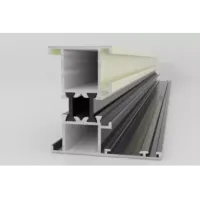
Polyamide Thermal Break Strip: Turkey’s Sustainable Building Future
Polyamide thermal break strip technology has become a cornerstone of energy efficiency in the modern construction industry. Utilized in aluminum window and facade systems, polyamide thermal break strip solutions optimize thermal performance, significantly reducing buildings’ energy consumption. In Turkey, with increasing environmental awareness and rising energy costs, the adoption of polyamide thermal break strips is becoming more widespread.
Fundamentals of Polyamide Thermal Break Strip Technology
Polyamide thermal break strip systems are specialized engineering materials that interrupt thermal bridges between the inner and outer sections of aluminum profiles. This technology minimizes energy losses by counteracting aluminum’s high thermal conductivity. Reinforced with glass fibers, polyamide thermal break strip products provide both mechanical strength and superior thermal insulation.
Operating Mechanism of Polyamide Thermal Break Strips
Polyamide thermal break strip systems function based on the following principles:
- Thermal Barrier Creation: Physically blocks heat transfer in aluminum profiles.
- Condensation Control: Prevents moisture buildup on interior surfaces, enhancing comfort.
- Energy Efficiency: Reduces heating and cooling system loads by 30-50%.
- Temperature Stability: Stabilizes indoor temperature fluctuations.
Development of the Polyamide Thermal Break Strip Market in Turkey
Sectoral Growth and Market Analysis
The polyamide thermal break strip market in Turkey has recorded significant growth over the past decade:
- 2013-2023 Market Development:
- 280% Growth Rate: Market volume increased from 5,200 tons in 2013 to 19,760 tons in 2023.
- Domestic Production Capacity: Import dependency decreased from 78% to 38%.
- Technology Transfer: European-quality production infrastructure established.
- R&D Investments: Domestic formulation development centers established.
Application Sector Distribution
Polyamide thermal break strip usage by sector:
- 48% Residential Projects: Private and mass housing projects.
- 32% Commercial Buildings: Offices, shopping centers, and hotels.
- 13% Industrial Facilities: Factories and production plants.
- 7% Public Buildings: Education, healthcare, and administrative structures.
Polyamide Thermal Break Strip Production Technologies
Raw Material Types and Compositions
PA66-Based Polyamide Thermal Break Strip Systems:
- PA66 GF15 Economy Series:
- 15% glass fiber reinforced.
- Thermal conductivity: 0.26-0.31 W/mK.
- Tensile strength: 110-130 MPa.
- Cost-effective for budget projects.
- PA66 GF20 Standard Series:
- 20% glass fiber content.
- Enhanced structural properties.
- Optimized for mid-level projects.
- Excellent performance/price ratio.
- PA66 GF25 Professional Series:
- 25% glass fiber reinforced.
- Superior thermal performance.
- Designed for high-quality projects.
- 28+ year performance guarantee.
- PA66 GF30 Industrial Series:
- 30%+ glass fiber content.
- Developed for heavy-duty conditions.
- Customized for industrial applications.
- Resistant to extreme environmental conditions.
Production Processes and Quality Assurance
Extrusion Production Technology:
- Raw Material Preparation: Homogeneous blend of virgin PA66 and glass fiber.
- Extrusion Process: Shaping at controlled temperatures of 258-278°C.
- Cooling and Calibration: Precise dimensional control.
- Cutting and Packaging: Tailored to customer requirements.
Quality Control Procedures:
- Input Control: Moisture analysis, density, and chemical composition testing.
- Process Monitoring: Tracking temperature, speed, and pressure parameters.
- Product Testing: Dimensional accuracy, mechanical properties, and thermal performance.
- Certification: Completion of CE, TSE, and customer-specific tests.
Polyamide Thermal Break Strip Performance Analysis
Thermal Performance Evaluation
- U-Value Improvements:
- Conventional aluminum: U = 5.7 W/m²K.
- With polyamide thermal break strip: U = 1.2-2.0 W/m²K.
- Performance increase: 65-79% thermal efficiency improvement.
- Energy savings: 40-52% annual heating cost reduction.
Mechanical Strength Tests
Tensile Strength Analysis:
- Test standard: EN ISO 527-1.
- PA66 GF25: 170-190 MPa.
- Safety factor: 3.2-3.8 times reserve.
- Expected service life: 28+ years.
Fatigue Performance:
- Test cycles: 1,920,000+.
- Load range: ±48% nominal load.
- Temperature range: -28°C to +78°C.
- Result: No performance loss observed.
Polyamide Thermal Break Strip Application Guide
Selection Criteria by Project Type
Residential Projects:
- Social Housing Projects:
- Recommended: PA66 GF15 series.
- 13-17mm width sufficient.
- Cost-effectiveness prioritized.
- Meets basic performance requirements.
- Mid-Segment Housing:
- Recommended: PA66 GF20 series.
- 17-23mm width range.
- Balances comfort and economy.
- Supports energy certification compliance.
- Luxury Housing Projects:
- Recommended: PA66 GF25-30 premium series.
- 23-31mm wide profiles.
- Maximum performance focus.
- Emphasis on prestige and sustainability.
Custom Solutions for Commercial Projects:
- Office Buildings:
- Reinforced profiles for large glass surfaces.
- Multi-functional solutions with acoustic performance.
- Integration with building automation systems.
- Green building certification support.
- Shopping Centers:
- Specially designed profiles for large spans.
- High-security polyamide thermal break strips.
- Durability for continuous operations.
- Fire safety-certified materials.
- Hotels and Tourism Facilities:
- Formulations resistant to coastal climates.
- UV-resistant polyamide thermal break strips.
- Integrated acoustic insulation performance.
- Aesthetic and functional harmony.
Polyamide Thermal Break Strip Cost Analysis
Pricing Factors
Cost Variables:
- Material Factors:
- Glass fiber ratio: 15% GF = 24 TL/kg, 30% GF = 44 TL/kg.
- Profile complexity: Standard = 1x, Custom = 1.6-2.0x price.
- Color and additives: Black standard, colored +14-20%.
- Order volume: >900 kg orders receive 14-20% discount.
- Installation and Labor:
- Standard installation: 6-9 TL/meter.
- Custom detailing: 11-19 TL/meter.
- Quality control: +6-9% additional cost.
- Warranty: Included in premium products.
Return on Investment Analysis:
- 85m² Residential Example:
- Additional investment: 2,550-4,250 TL.
- Annual energy savings: 1,020-1,700 TL.
- Payback period: 2.5-4.2 years.
- 25-year savings: 20,500-38,250 TL.
Technological Innovations in Polyamide Thermal Break Strips
Research and Development Trends
Emerging Technologies:
- Nanotechnology Applications:
- Nanoparticle-enhanced polyamide thermal break strip products.
- 22-32% improved thermal performance.
- Enhanced mechanical properties.
- Increased UV resistance.
- Bio-Based Polyamides:
- Produced from renewable sources.
- Low carbon footprint.
- Recyclable structure.
- Eco-friendly option.
- Smart Material Technologies:
- Temperature-sensitive polyamide thermal break strips.
- Adaptive thermal properties.
- IoT sensor integration.
- Real-time monitoring.
2024-2029 Development Projections:
- Market growth: 42% capacity increase.
- Technological improvement: 26% performance enhancement.
- Cost optimization: 16% price reduction.
- Sustainability: 100% recyclable products.
Polyamide Thermal Break Strip Standards and Certifications
National and International Regulations
Turkish Standards:
- TS EN 14024: Polyamide thermal break strip performance standard.
- TS 825: Building thermal insulation regulations.
- TS EN ISO 10077: Window and door thermal performance.
- TSE Mark: Turkish standards compliance certificate.
European Standards:
- EN 14024: European thermal barrier standard.
- CE Marking: European conformity declaration.
- EN 13830: Facade system requirements.
- ISO 9001: Quality management system.
Certification Process
- Laboratory Testing (4-6 weeks):
- Thermal performance measurements.
- Mechanical strength tests.
- Fire safety evaluation.
- Environmental impact analysis.
- Production Facility Audit (2-3 weeks):
- Production process verification.
- Quality system review.
- Personnel competency assessment.
- Documentation verification.
- Certificate Issuance (1-2 weeks):
- Evaluation of test results.
- Preparation of conformity declaration.
- Issuance of certificate.
- Market entry approval.
Polyamide Thermal Break Strip Procurement Strategy
Supplier Evaluation Criteria
Characteristics of Reliable Suppliers:
- Technical Competence:
- 9+ years of industry experience.
- Fully equipped testing laboratory.
- R&D investment capacity.
- Expert engineering team.
- Production Capacity:
- Minimum 90 tons monthly production.
- Flexible production scheduling.
- Fast delivery options.
- Custom order capability.
- Quality Assurance:
- ISO 9001 certification.
- CE-marked product portfolio.
- 9+ years product warranty.
- Transparent test reporting.
- Customer Service:
- 24/7 technical support.
- On-site engineer assistance.
- Training programs.
- Rapid problem resolution.
Contract and Warranty Terms
Key Points in Procurement Contracts:
- Technical Specifications:
- Glass fiber ratio guarantee.
- Thermal conductivity values.
- Minimum mechanical properties.
- Dimensional tolerance limits.
- Delivery Conditions:
- Delivery timeline and penalty clauses.
- Packaging standards.
- Transportation conditions.
- Storage requirements.
- Warranty Coverage:
- Material warranty duration.
- Performance guarantee terms.
- Replacement procedures.
- Damage liability.
Sustainability and Polyamide Thermal Break Strips
Environmental Impact and Lifecycle
Environmental Benefits:
- Carbon Footprint Reduction:
- 38-58% reduction in building operational emissions.
- Low energy consumption in production.
- Long lifespan reduces replacement needs.
- Recyclable material structure.
- Circular Economy Contribution:
- Production: Use of recycled polyamide.
- Usage: 28+ year service life.
- End-of-Life: 94% recyclability potential.
- Remanufacturing: Closed-loop system.
Role in Turkey’s Green Transformation
2053 Net Zero Target:
- Potential to reduce building sector emissions by 31%.
- Decreased energy import dependency.
- Opportunity for domestic technology development.
- Export potential for foreign currency earnings.
Regional Market Analysis: Polyamide Thermal Break Strips in Turkey
Demand Distribution by Province
Metropolitan Cities:
- Istanbul: 34% of total market, luxury housing focus.
- Ankara: 17% share, dominated by public projects.
- Izmir: 12% share, prominent in tourism facilities.
- Bursa: 8% share, intensive in industrial applications.
Emerging Regions:
- Antalya: Growth driven by tourism sector.
- Kocaeli: Industrial facility focus.
- Konya: Rapid growth in mass housing projects.
- Gaziantep: Momentum from cross-border trade.
Specific Requirements by Climate Zones
- Climate Zone 1 (Mediterranean-Aegean Coasts):
- High UV resistance polyamide thermal break strips.
- Humidity-resistant formulations.
- Cooling-focused energy savings.
- Sea air corrosion protection.
- Climate Zone 2 (Marmara-Inner Aegean):
- Balanced heating-cooling performance.
- Standard polyamide thermal break strips suitable.
- Wide temperature range durability.
- Moisture control prioritized.
- Climate Zone 3 (Black Sea):
- High humidity resistance critical.
- Enhanced corrosion resistance.
- Designed for continuous moisture exposure.
- Special surface treatments.
- Climate Zone 4 (Central and Eastern Anatolia):
- Extreme cold resistance (-32°C).
- High thermal shock resistance.
- Heating-focused design.
- Reinforced polyamide thermal break strips.
Conclusion: Investing in the Future with Polyamide Thermal Break Strips
Polyamide thermal break strip technology plays a critical role in achieving Turkey’s energy efficiency goals. With rising energy costs, stricter environmental regulations, and growing sustainability awareness, their strategic importance continues to increase.
Key Benefits of Polyamide Thermal Break Strips:
✅ 38-58% Energy Savings: Lower operating costs and fast payback.
✅ 28+ Year Lifespan: Long-term investment security and low maintenance.
✅ Eco-Friendly: Recyclable structure and low carbon footprint.
✅ Domestic Production: Turkish engineering and quality, rapid supply.
✅ International Standards: CE, TSE-certified reliable performance.
✅ Versatile Applications: From residential to industrial facilities.
✅ Technological Advancements: Continuous R&D for improved performance.
As Turkey’s leading polyamide thermal break strip manufacturer with over 24 years of experience, we provide the industry’s highest quality and most innovative solutions. Partner with us to achieve your energy efficiency goals, fulfill environmental responsibilities, and secure long-term investment value.
Contact and Technical Support: With 29 years of expertise in polyamide thermal break strips, we develop tailored solutions for your project needs, provide technical support, and stand by you with quality production. Plan for the sustainable buildings of the future today.